Plastic Bottle Recycling Process Diagram

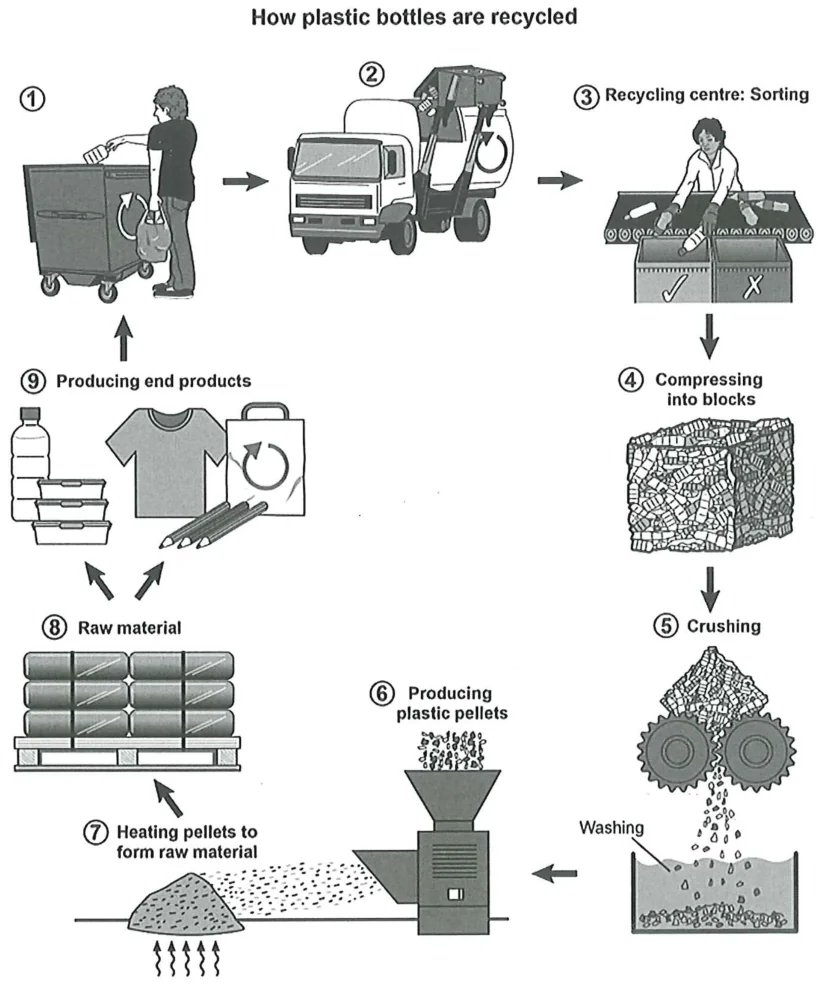
The diagram below shows the process for recycling plastic bottles. Summarise the information by selecting and reporting the main features, and make comparisons where relevant.

Cambridge IELTS 16 Academic Test 4 Writing Task 1 visual

Annotated response

8 correction notes

Showing 8 correction notes.

The diagram illustrates the plastic bottle recycling procedure and the different steps involved in this recycling process.

Overall, the process of recycling plastic bottles has nine steps, starting from placing the bottles in the designated bins to producing end-consumer products like bags, t-shirts, pencils and so on.

As the illustration depicts, the first step of recycling plastic bottles begins with people placing used plastic bottles in specified . Next, those bottles are collected and transported to recycling centres where workers sort out recyclable plastic bottles. Selected bottles are then compressed and converted into large blocks which are, afterwards, sent through crushing machines. The crushing process produces small plastic pieces which are then washed before feeding them into a machine to make plastic pellets. In the next step, heat is applied to the pellets that ultimately form the raw materials for producing different plastic-made consumer goods. Next, the raw materials are refined and rolled to manufacture end products like t-shirts, , plastic bottles, containers, and so on. the end products are placed in the designated bins once they get or used. It keeps the plastic recycling process going.

Overall assessment

Why this response received Band 7.0

The response covers all nine stages of the recycling process in a logical sequence and includes a clear overview of the cycle from collection to end products. Its main limitation is a small amount of invented detail, such as products being returned to bins once worn out and raw material being 'refined and rolled', which goes beyond the visual prompt.

IELTS criteria

How each score was decided

Task Achievement

7.0

The response presents a clear overview of the nine-stage cyclical process and accurately covers the key stages from bin collection through sorting, compressing, crushing, washing, pellet production, heating, and end products, though it adds some unsupported detail such as products being returned to bins once torn out and raw material being refined and rolled.

Coherence and Cohesion

7.0

The response progresses logically through the stages with a clear introduction, overview, and body sequence, using a range of cohesive devices such as 'next', 'afterwards', and 'in the next step', though some linking is slightly repetitive and the final sentences feel appended rather than fully integrated.

Lexical Resource

7.0

The response uses a sufficient range of process-related vocabulary, including terms like 'compressed', 'crushing machines', 'pellets', and 'raw materials', with generally good precision, though phrases like 'and so on' and the invented 'refined and rolled' reduce lexical accuracy at points.

Grammatical Range and Accuracy

7.0

The response uses a variety of complex structures, including relative clauses and passive voice appropriate for process description, with generally good control, although occasional faulty constructions such as 'the raw materials are refined and rolled which is used to manufacture' show imperfect clause management.