Plastic Bottle Recycling Process

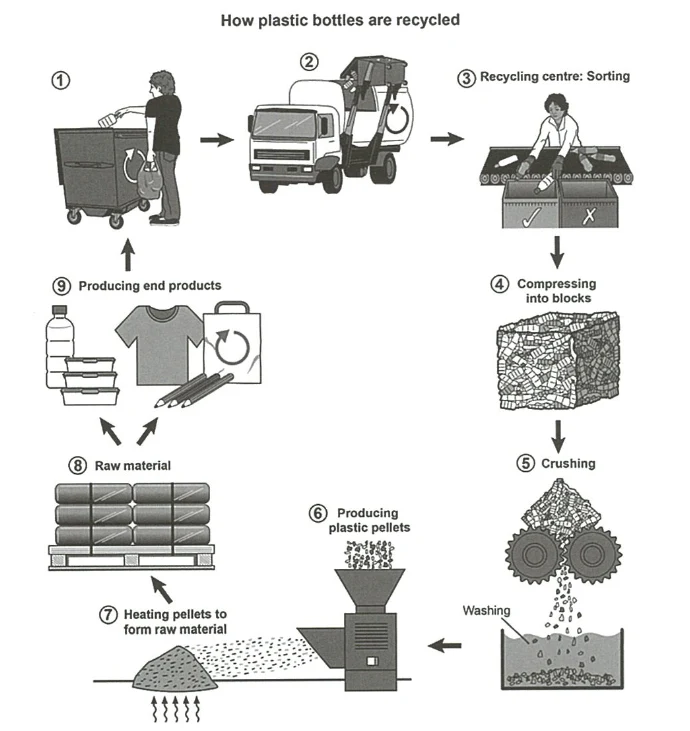
The diagram below shows the process for recycling plastic bottles.
Process diagram for an IELTS Academic Task 1 question about Plastic Bottle Recycling Process.
Study the visual before selecting the main features.
Read an accessible description

Process diagram for an IELTS Academic Task 1 question about Plastic Bottle Recycling Process.

Write this question

Write, submit, improve.

The current question is preloaded. Your draft is saved locally while scoring integration is being prepared.

High-fidelity exam simulation IELTS scoring criteria Detailed correction examples
IELTS band boosterWrite · Score · Improve
Part 1

You should spend about 20 minutes on this task. Write at least 150 words.

The diagram below shows the process for recycling plastic bottles.

Process diagram for an IELTS Academic Task 1 question about Plastic Bottle Recycling Process.
Words: 020:00 starts on first word

Marked essay library

Compare responses from Band 7.5–8.5.

Predicted band7.5The diagram illustrates the plastic bottle recycling procedure and the different steps involved in this recycling process. Overall, the process of recycling plastic bottles has nine steps, starting from placing the bottles in the designated bins to producing end-consumer products like bags, t-shirts, pencils and so on. As the illustration depicts, the first step of recycling plastic bottles begins with people placing used plastic bottles in specified recycle bins. Next, those bottles are collected and transported to recycling centres where workers sort out recyclable plastic bottles. Selected bottles are then compressed and converted into large blocks which are, afterwards, sent through crushing machines. The crushing process produces small plastic pieces which are then washed before feeding them into a machine to make plastic pellets. In the next step, heat is applied to the pellets that ultimately form the raw materials for producing different plastic-made consumer goods. Next, the raw materials are refined and rolled which is used to manufacture end products like t-shirts, pens, plastic bottles, containers, and so on. To reiterate the recycling process, the end products are placed in the designated bins once they get torn out or used. It keeps the plastic recycling process going.
Task achievement8.0
Coherence & cohesion8.0
Lexical resource7.0
Grammar7.5
Predicted band8.5The diagram depicts the sequential process involved in recycling plastic bottles. As is observed, the recycling of plastic bottles is a cyclical and multi-stage process that begins with people discarding used plastic bottles and ends with the production of new plastic items. The process highlights the systematic transformation of plastic waste into reusable goods. Initially, when used plastic bottles are discarded into recycling bins by end-users, they are collected by garbage trucks, which transport those bottles to a recycling facility. At the facility, workers sort out recyclable ones from non-recyclable waste. The selected plastic bottles are then compressed into blocks using compacting equipment. Following this, the compacted blocks are shredded into small plastic fragments, which are subsequently washed to remove impurities. The clean plastic pieces are then poured into machines to produce plastic pellets. In the next step, those pellets are heated and processed to turn them into raw materials. These raw materials are then ready to be used to manufacture a wide variety of plastic products such as clothes, containers, and bottles. Once those goods are used and discarded in garbage bins, the plastic recycling process is repeated.
Task achievement9.0
Coherence & cohesion8.0
Lexical resource8.0
Grammar8.0
Predicted band8.5The process diagram meticulously delineates the nine-stage process involved in recycling plastic bottles - beginning with consumers discarding them in the designated bins and culminating in the production of new consumer plastic products. Overall, plastic bottle recycling is a circular system where used bottles are transformed into raw materials for a variety of new items, which can then be recycled again. Plastic bottle recycling begins with consumers depositing used plastic bottles into designated recycling bins. These bottles are subsequently collected and transported to a recycling plant. Upon arrival, the bottles undergo a crucial sorting phase in which workers manually separate recyclable plastics from other waste. Following this, the sorted bottles are compressed into large, compact blocks, which are then fed into crushing machines. This mechanical breakdown yields small plastic fragments. These fragments are thoroughly washed to ensure purity before being introduced into a machine that produces plastic pellets. In the next stage, these pellets are subjected to heat, forming the raw material essential for manufacturing a diverse range of plastic-based goods. Finally, these refined raw materials are rolled out to produce various end products, such as t-shirts, pens, and new plastic bottles or containers, thus completing the cycle as these products will eventually be recycled once again.
Task achievement8.5
Coherence & cohesion8.5
Lexical resource8.0
Grammar8.5